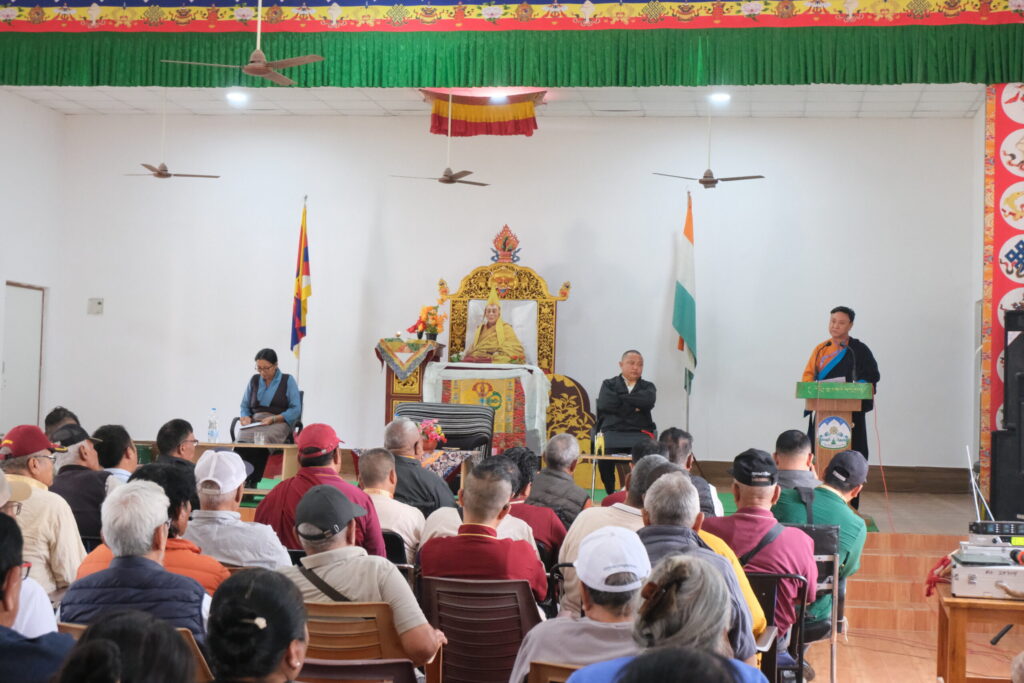
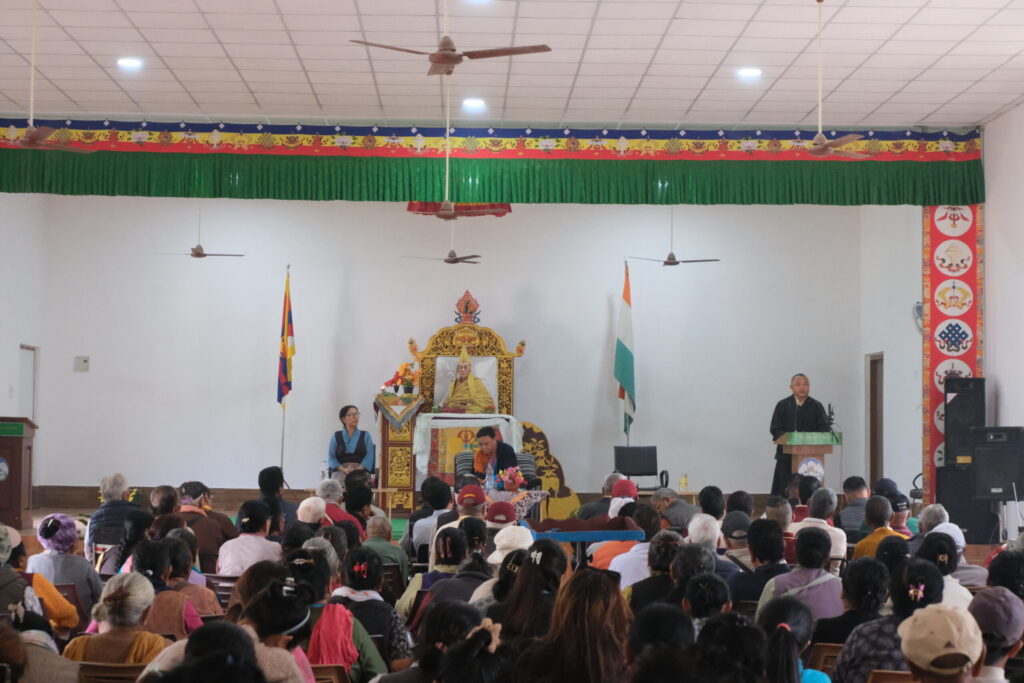
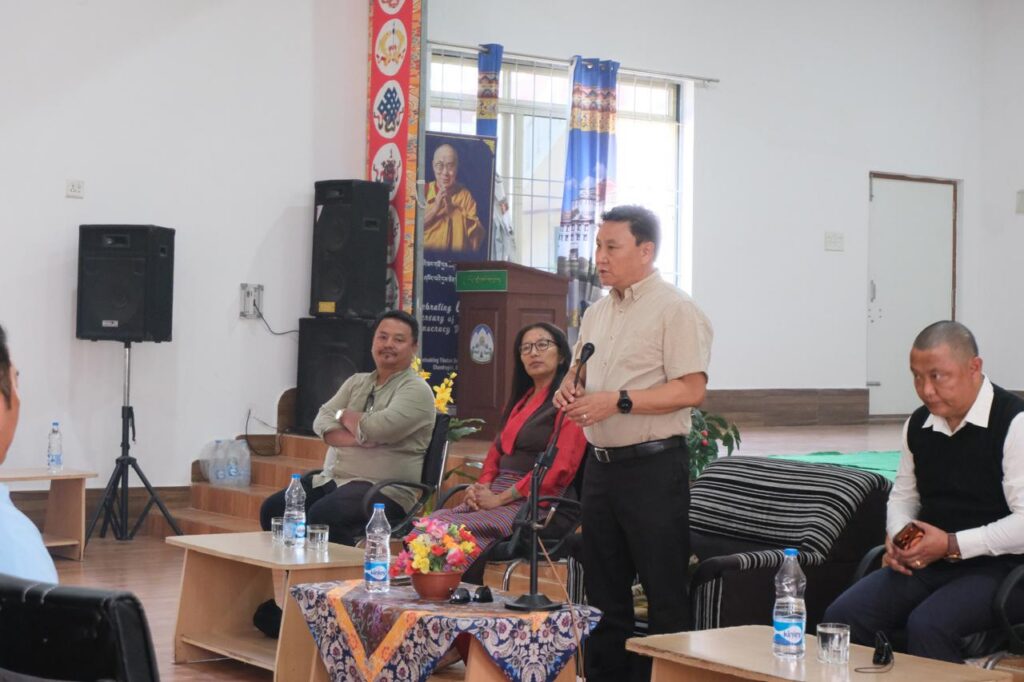
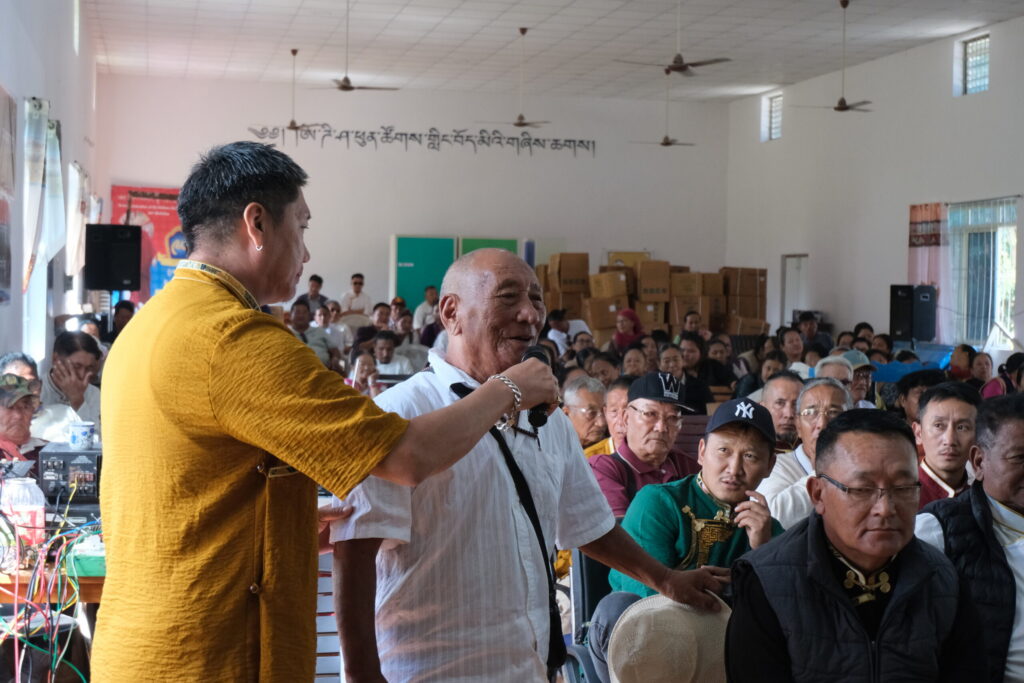
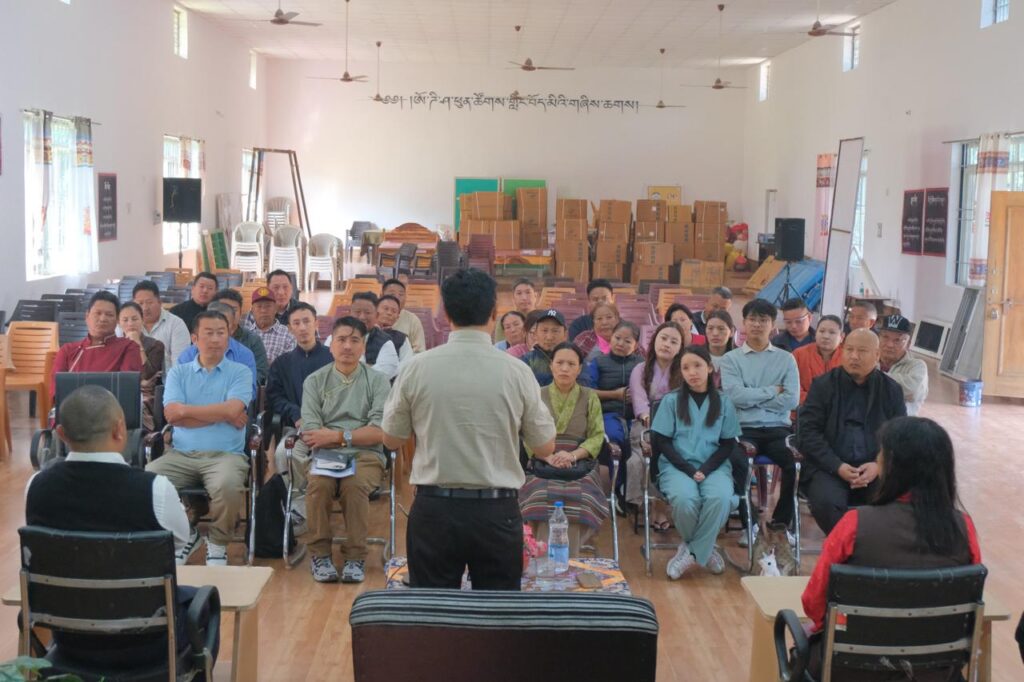
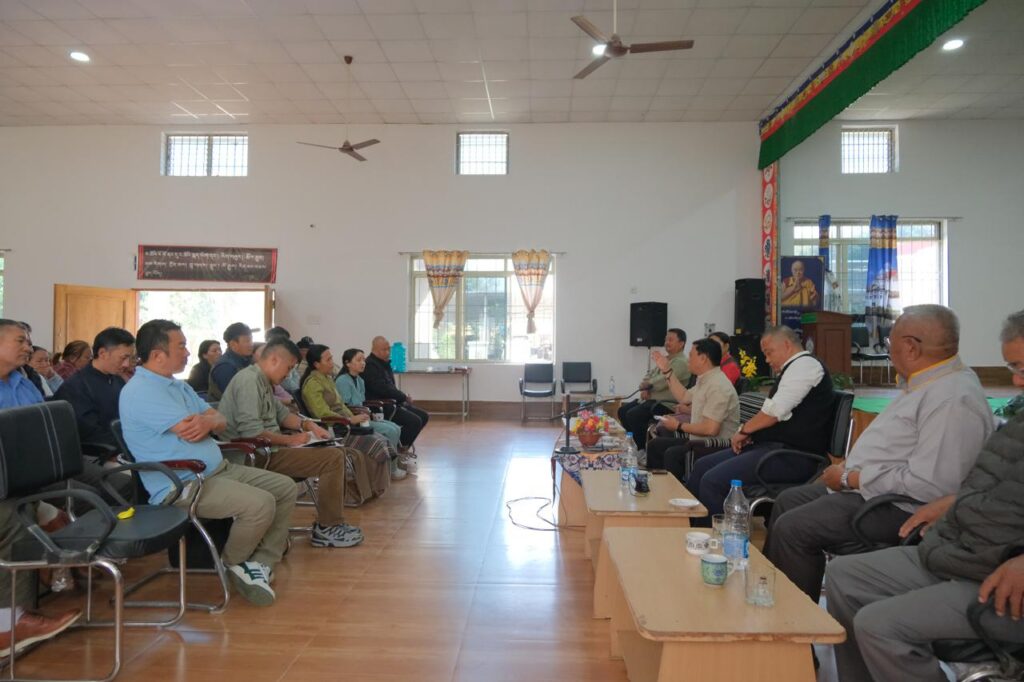
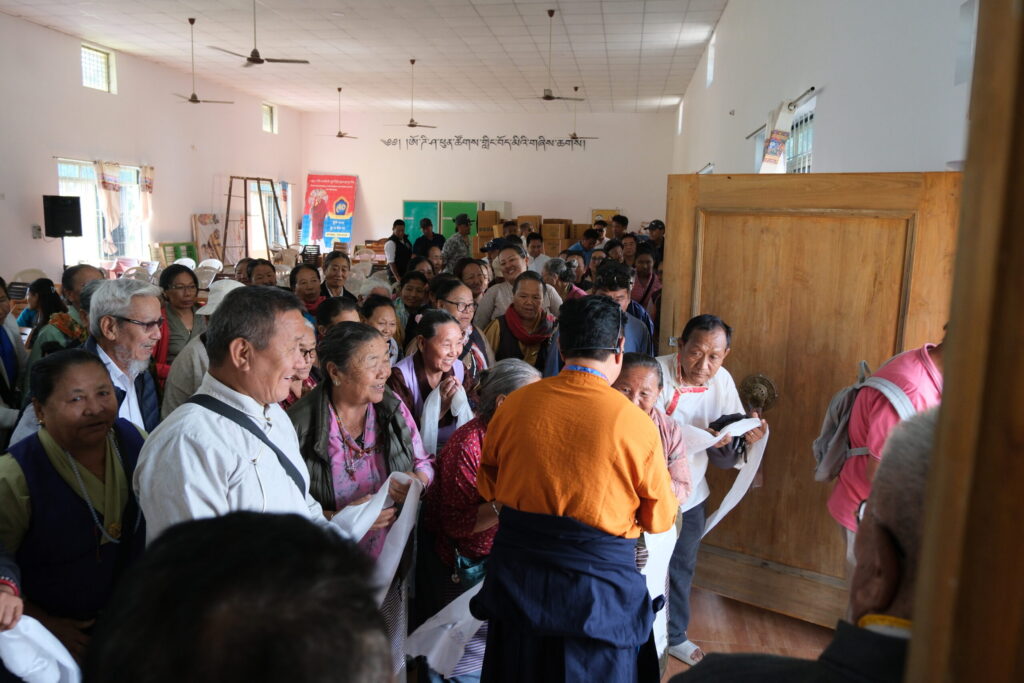
Dharamshala: On 11 November 2026, on the final day of his official engagements in Phuntsokling Tibetan Settlement, Odisha, Home Kalon Palden Dhondup addressed local residents at the Community Hall in the morning.
During the public address programme, Tibetan Settlement Officer Karma Lodoe Sangpo delivered a welcome address on behalf of the settlement, expressing heartfelt congratulations and greetings to Kalon on his election as Kalon of the Department of Home, and warmly welcoming him on his maiden visit to the settlement since assuming office. Following this, the Settlement Office presented a report for the period from April to October 2026.
In his address, Home Kalon explained that the primary purpose of his visit was to offer solace and solidarity to the community over the heavy crop damage local farmers sustained during the recent severe storms and cyclone.
He also outlined his itinerary to meet grassroots community members, visit local monasteries, governmental and non-governmental organisations, and tour the settlement villages as part of his first official tour in his capacity as Home Kalon of the 17th Kashag.
The Kalon shared that after assuming office on 2 June 2026, his official visits began with the Poanta Cholsum Tibetan Settlement in Himachal Pradesh, followed by tours of scattered Tibetan communities in the Northeastern regions of Kalimpong, Darjeeling, and Gangtok. Following his visit to Odisha Phuntsokling, his schedule includes subsequent official visits to the Mainpat Phendeling and Bhandara Norgyeling settlements.
Kalon Palden Dhondup recalled his former time as Settlement Officer of Odisha Phuntsokling from 2002 to 2007, noting that having served there for more than four years, he could clearly see how much the settlement has progressed over the years. He attributed this remarkable progress to the benevolent leadership of His Holiness the 14th Dalai Lama, the dedicated efforts of the Central Tibetan Administration (CTA) and the contributions of the older generation.
Kalon further emphasised that the strength and sustainability of the Tibetan community in exile depend on the courage and determination of its people. He praised the residents for continuing agricultural activities for over 62 years since the settlement’s establishment. However, he expressed concern over the declining number of farmers as people increasingly move away from agriculture with material progress. He urged residents to continue farming and ensure that no land remains unused. For families facing difficulties in cultivation, he suggested planting trees on their farmland to help preserve the settlement’s land.